
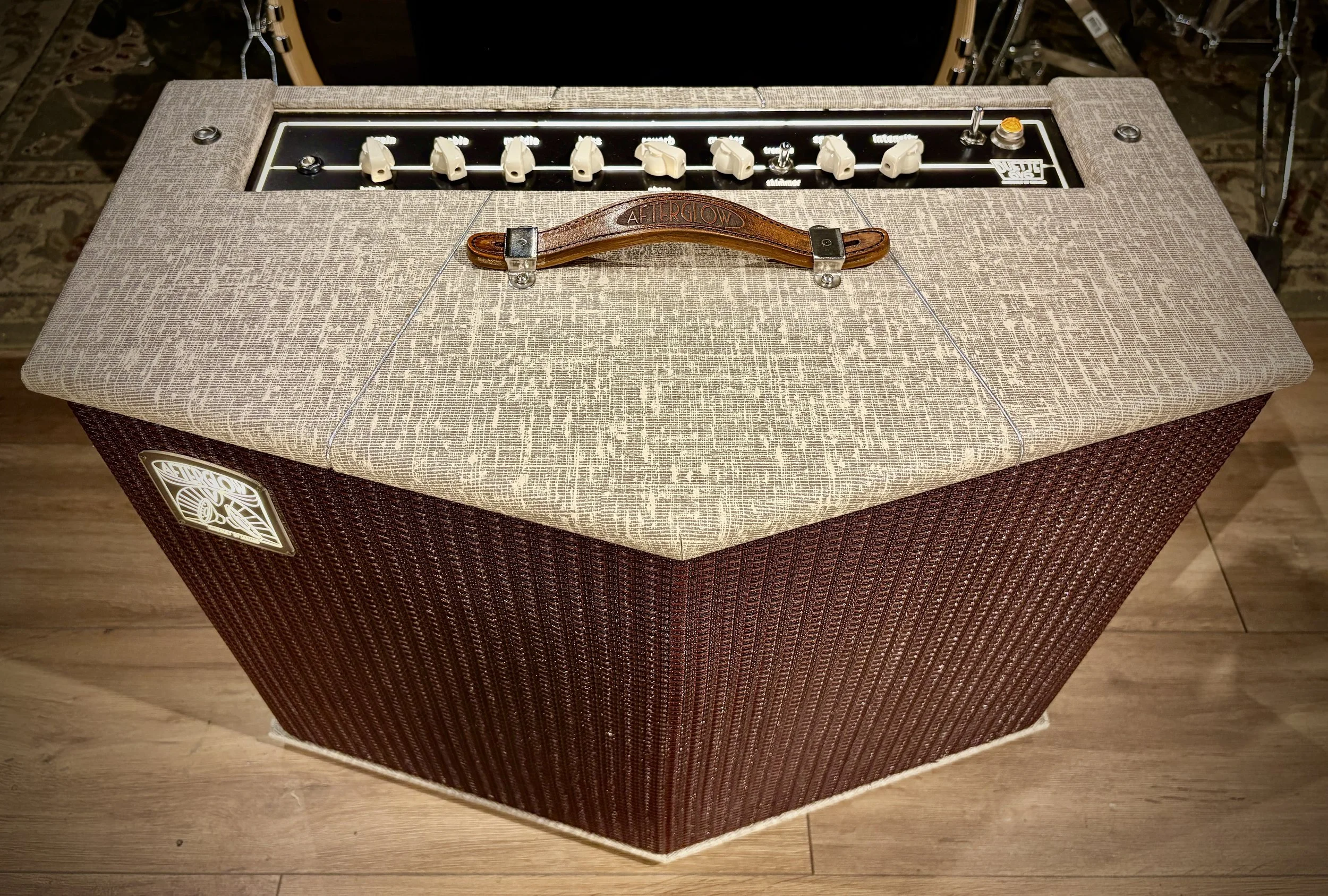
When people talk about a stereo guitar amplifier, they mean an amp that sends sound through two separate sides: left and right. When those sides carry slightly different signals, you can hear movement, width and space. Delay repeats might bounce from side to side, or a chorus might spread around your central guitar sound.
Simply having two speakers doesn’t make an amp stereo. If both speakers play the same signal, that’s dual mono. It can still sound big and full, but you won’t get the left-to-right movement of a stereo sound.
One guitar, two amp paths
You can make a stereo rig with two separate amps, or use one amp that has two signal paths and two power stages inside it. A stereo tube guitar amp—or stereo valve guitar amp, as we’d usually call it in the UK—brings both sides together in one unit.
Stereo effects can give each side something different to play. A stereo delay or chorus, for example, can send a different signal left and right. You can also set up wet/dry: one side plays your direct guitar, while the other carries the sound with effects. Wet/dry describes how you arrange the signals; it doesn’t automatically mean the amp itself is stereo.
Two ways to do it: Duette and Empire
At Afterglow Amplifiers, the Duette Combo and Duette Head start with a mono signal, then open out into two paths through a stereo effects loop. There’s one mono send and a stereo return, so a stereo pedal can send its left and right outputs back through the two sides of the amp. That’s the stereo fx loop in action.
The Empire Combo and Empire Head work differently. They have two amplifier paths from the input onwards, each with its own response and character. You get two sides of the amp in one stereo valve amplifier.
Both the Duette and Empire use an ECL82 in their valve-driven reverb circuit. That’s another part of the design; what makes the amps stereo is the way their two signal paths work.
The speakers matter too
For the stereo effect to come across, you need to hear the two sides as separate sounds. An angled speaker cabinet points its speakers in different directions, helping spread the sound when you’re standing close to the amp. How wide it feels depends on the room, where you’re listening from and what’s happening in the signal paths.
And if you plug into a venue where the guitar is heard in mono, you’ll lose the left-to-right movement, but you can still hear the guitar. It’s useful to check how your effects sound in mono as well as stereo.
So, the simple answer is: stereo means two sides carrying different parts of the sound. Two speakers are only the beginning. The Duette opens into stereo after its mono front end; the Empire has two paths from the input. Both put a stereo amp setup into one amplifier and an angled cabinet.